
Vehicle collisions do not only occur on public roads. Accidents in parking lots, apartment complexes, gated communities, and commercial garages can raise complex questions about fault, insurance coverage, and the role California Vehicle Code provisions play in determining liability.
Davana Law represents injured individuals throughout California in vehicle collision claims involving injury compensation, liability disputes, and insurance negotiations. Our team of car accident attorneys works with clients navigating everything from routine accident claims to more complex cases involving contested liability, serious injuries, and detailed accident investigations. To request your free case evaluation, call (818) 501-1055.
Below, we discuss when California vehicle code applies to private property collisions:
Does California Vehicle Code Apply on Private Property?
Many drivers assume traffic laws stop applying once a vehicle enters a privately owned area. In reality, California law may still apply to conduct involving reckless driving, DUI-related behavior, hit-and-run incidents, or failure to exchange information after a collision. Although parking garages, apartment complexes, and commercial lots are privately maintained, drivers still carry a legal responsibility to operate vehicles safely inside those spaces.
Meanwhile, civil liability is evaluated separately from whether a citation was issued at the scene. A driver may leave a private parking lot without receiving a traffic ticket and still face substantial exposure through an insurance claim or personal injury lawsuit afterward. Consequently, ownership of the property rarely eliminates the legal consequences connected to negligent driving behavior.
What Counts as a Private Property Collision?
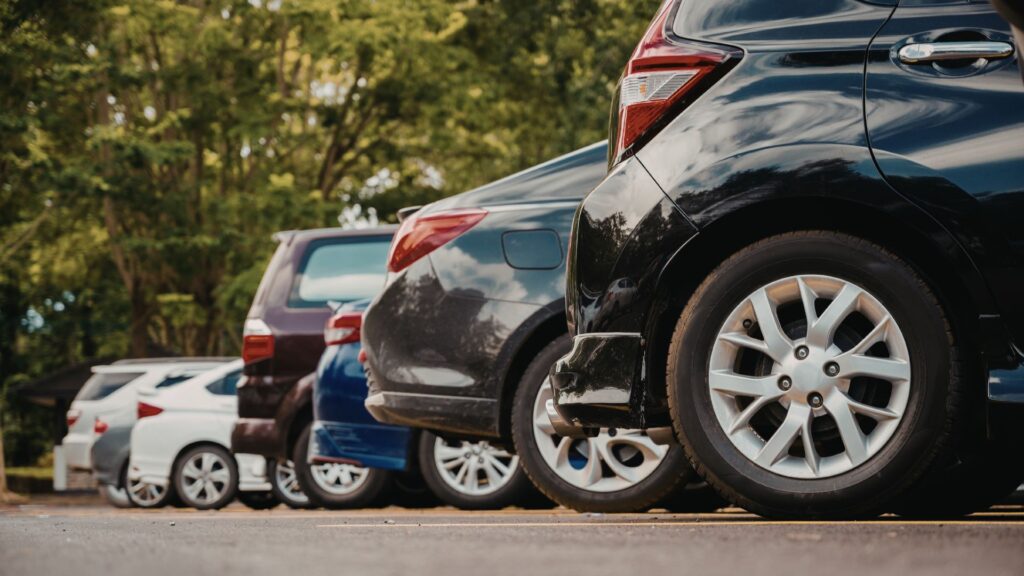
Private property collisions occur in far more locations than most people realize initially. Shopping centers, hotel garages, gated communities, office complexes, warehouse loading areas, and apartment parking lots all create traffic environments where accidents happen regularly despite lower driving speeds. Unlike public intersections with formal traffic controls, these spaces often rely heavily on driver judgment and informal right-of-way expectations.
Additionally, modern traffic flow inside commercial properties has become significantly more complicated in recent years. Rideshare pickups, food delivery drivers, pedestrians moving between parked vehicles, and electric vehicle charging stations all create unpredictable movement patterns that reduce visibility and reaction time. As a result, even relatively low-speed collisions inside private lots can still produce serious injury claims and disputed liability investigations.
How Is Fault Determined After a Private Property Accident?
Fault determination after a private property collision typically depends on a careful examination of how the accident occurred. Insurance companies, attorneys, and investigators may review surveillance footage, vehicle positioning, reversing movements, pedestrian activity, lighting conditions, and braking patterns when evaluating liability. Because traffic controls and driving patterns on private property can vary significantly, disputes often arise over whether a driver failed to yield, exercised reasonable care, or otherwise contributed to the collision.
Physical and digital evidence frequently play a critical role when the parties involved provide conflicting accounts of what happened. Security camera footage, dashcam recordings, vehicle damage patterns, skid mark direction, and scene photographs can all help establish the sequence of events. As a result, details that may appear insignificant immediately after the crash often become important during insurance negotiations and litigation proceedings.
What Evidence Should Be Collected After the Collision?
Evidence preservation becomes especially important after private property accidents because many scenes are never formally documented by law enforcement. Drivers should photograph vehicle placement, pavement markings, lighting conditions, nearby cameras, weather visibility, and surrounding property conditions before vehicles are moved from the scene. In many commercial properties, surveillance footage may only remain stored for a short period before automatic deletion occurs.
Furthermore, digital evidence now plays a major role in modern vehicle collision claims. Smartphone location history, rideshare app timestamps, dashcam footage, metadata attached to photographs, and vehicle event data recorders may all help establish how the accident occurred. In some cases, electronic records captured seconds before impact become more persuasive than witness recollections provided days later.
Contact an Auto Accident Attorney Near You for Private Property Collision Claims
Determining fault after a private property accident is not always straightforward. Questions about liability, insurance coverage, and the application of California law can quickly complicate a claim, especially when injuries or disputed facts are involved. Davana Law Firm’s experienced auto accident attorneys help injury victims throughout California navigate these challenges and pursue the compensation they deserve. To request your free case evaluation, call (818) 501-1055.